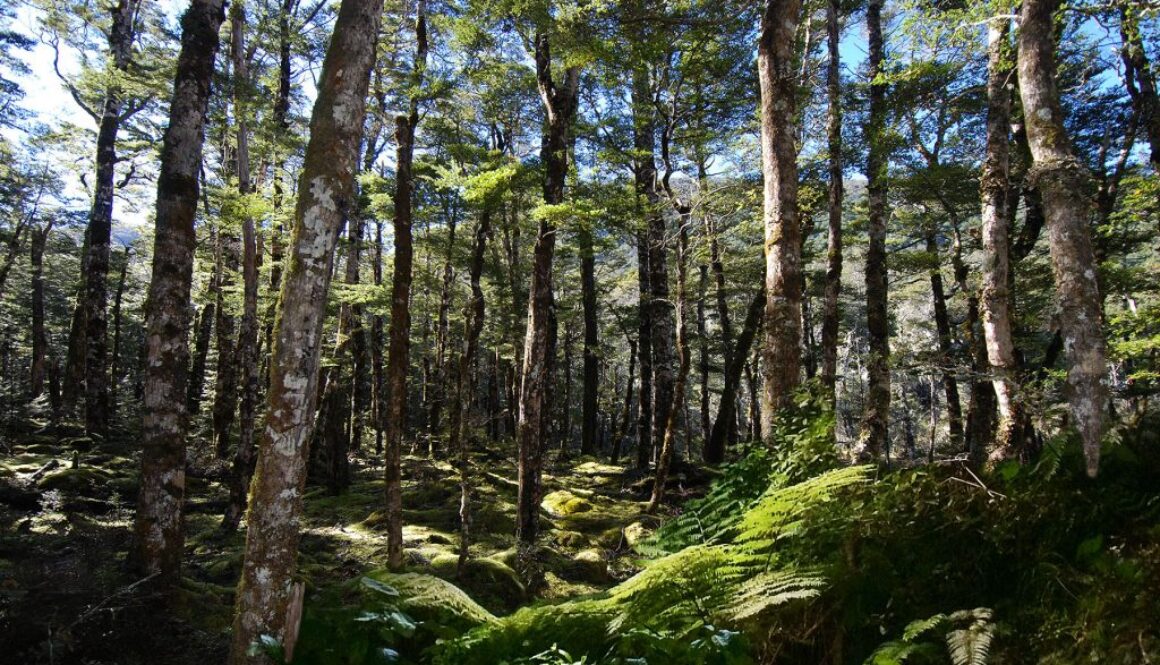
A NIWA-led study has found New Zealand’s native forests are absorbing more carbon dioxide (CO2) than previously thought.
Study leader, NIWA atmospheric scientist Dr Beata Bukosa, says the findings could have implications for New Zealand’s greenhouse gas reporting, carbon credit costs, and climate and land-use policies.
She says forests – both native and exotic – play a vital role in absorbing CO₂ through photosynthesis, but previous studies may have underestimated the amount of carbon taken up by New Zealand’s mature indigenous forests, which were thought to be roughly carbon neutral.
Using advanced modelling and NIWA’s supercomputer, the researchers examined a decade of atmospheric data, from 2011 to 2020, to better estimate the amount of CO₂ absorbed by New Zealand’s land ecosystems. The NIWA team worked with collaborators at GNS Science and Manaaki Whenua as well as other New Zealand and overseas universities and institutes.
The team used an inverse modelling technique – this combines atmospheric greenhouse gases with a model showing how air is transported through the atmosphere to identify CO2 sources and sinks – and compared the results against New Zealand’s Greenhouse Gas Inventory as well as ‘bottom-up’ models. While the Inventory applies a combination of field inventory, modelling, and remote sensing to quantify forest carbon stocks and stock changes, the ‘bottom-up’ models use calculations based on ecosystem processes, land use and climate across the country, says Dr Bukosa.
“It was thought that some areas and land use types were in a near-balance state with the absorption and release of CO₂. Earlier estimates of how much carbon was removed by New Zealand land ecosystems ranged from a net 24 to 118 million tonnes a year. Our research found that New Zealand’s natural environment absorbed approximately 171 million tonnes of CO₂ annually.” – Dr Bukosa
She says the largest differences between earlier estimates and the new findings came in the South Island.
“This was especially in areas dominated by mature native forests and certain grazing lands. We also found seasonal variation, as during autumn and winter, less CO₂ is released into the atmosphere than earlier estimates suggested.”
“That study was based on only three years of data, and we weren’t sure
if it was just a transient effect related to the climatic conditions, or
if the effect was confined to Fiordland. Our new study shows the carbon
sink is more widespread than we thought, particularly across the South
Island, with greater uptake of CO₂ extending up the West Coast.
“With improvements in our modelling techniques, and data coverage, we’ve
now shown the extra carbon uptake has persisted for at least a decade.
More research could help us understand exactly why our method has shown
such a difference in the carbon source and sink balance compared with
other methods.”
Inverse modelling provides an independent estimate of emissions that can complement inventory-based approaches for emissions reporting, she says.
“New Zealand was the first country to develop the capability to infer
national CO₂ emissions from atmospheric data and has since supported
other countries to develop similar capability.”
Dr Andrea Brandon, a Ministry for the Environment principal scientist who co-authored the study, said the findings help build a clearer picture of the role New Zealand’s natural systems play in absorbing emissions from the atmosphere. However, further work will be needed before they can be included in official emissions reporting.
“We continually improve the Inventory – New
Zealand’s annual record of emissions and removals – as new science and
evidence comes to light. This ensures we have robust information so that
we continue to meet our international reporting obligations.
“The findings from this study indicate there
may be additional carbon uptake somewhere in the system that we are
currently not tracking. We need to identify what we are missing so that
we can further refine our Inventory methods to capture it,” – Dr Andrea Brandon
Dr Bukosa says the results, due to be published shortly in the journal Atmospheric Chemistry and Physics and available here in preprint, have important implications for New Zealand’s tracking of carbon emissions and climate policies:
“We need to better understand why our native forests are absorbing more
CO₂ than expected, and what this could mean for our efforts to reduce
greenhouse gas emissions and achieve our domestic and international
targets.”
The research was part of a NIWA-led, MBIE-funded Endeavour programme called CarbonWatch NZ, which ended last year. NIWA principal scientist Dr Sara Mikaloff-Fletcher led CarbonWatch NZ and says the team is now looking to extend this work to definitively solve the puzzle of the difference in carbon between inventory methods and atmospheric measurements.
“This research suggests that we could make the most of opportunities to
slow climate change through changes to land management. Projections
suggest New Zealand will need 84 million tonnes of emissions reductions
on top of what can be done at home to meet its 2030 international
commitments under the Paris Agreement. In addition to reducing the need
for overseas offsets, better management of our native forests and other
lands could enable New Zealand to be long-term stewards of our carbon
sinks and offer magnificent biodiversity co-benefits.” – Dr
Mikaloff-Fletcher
Under the landmark 2015 Paris Agreement on climate change, humanity is seeking to reduce greenhouse gas emissions and keep planetary heating to no more than 1.5°C above the pre-industrial average. In 2024, temperatures on Earth surpassed that limit.
This was not enough to declare the Paris threshold had been crossed, because the temperature goals under the agreement are measured over several decades, rather than short excursions over the 1.5°C mark.
But the two papers just released use a different measure. Both examined historical climate data to determine whether very hot years in the recent past were a sign that a future, long-term warming threshold would be breached.
The answer, alarmingly, was yes. The researchers say the record-hot 2024 indicates Earth is passing the 1.5°C limit, beyond which scientists predict catastrophic harm to the natural systems that support life on Earth.
2024: the first year of many above 1.5°C
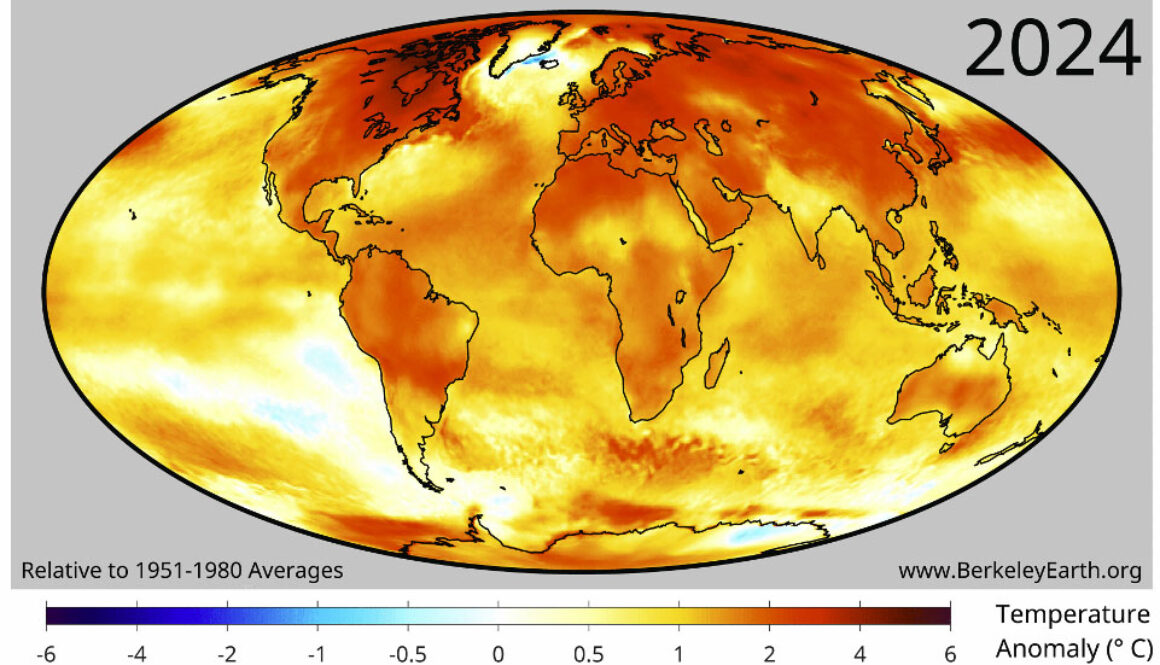
Climate organisations around the world agree last year was the hottest on record. The global average temperature in 2024 was about 1.6°C above the average temperatures in the late-19th century, before humans started burning fossil fuels at large scale.
Earth has also recently experienced individual days and months above the 1.5°C warming mark.
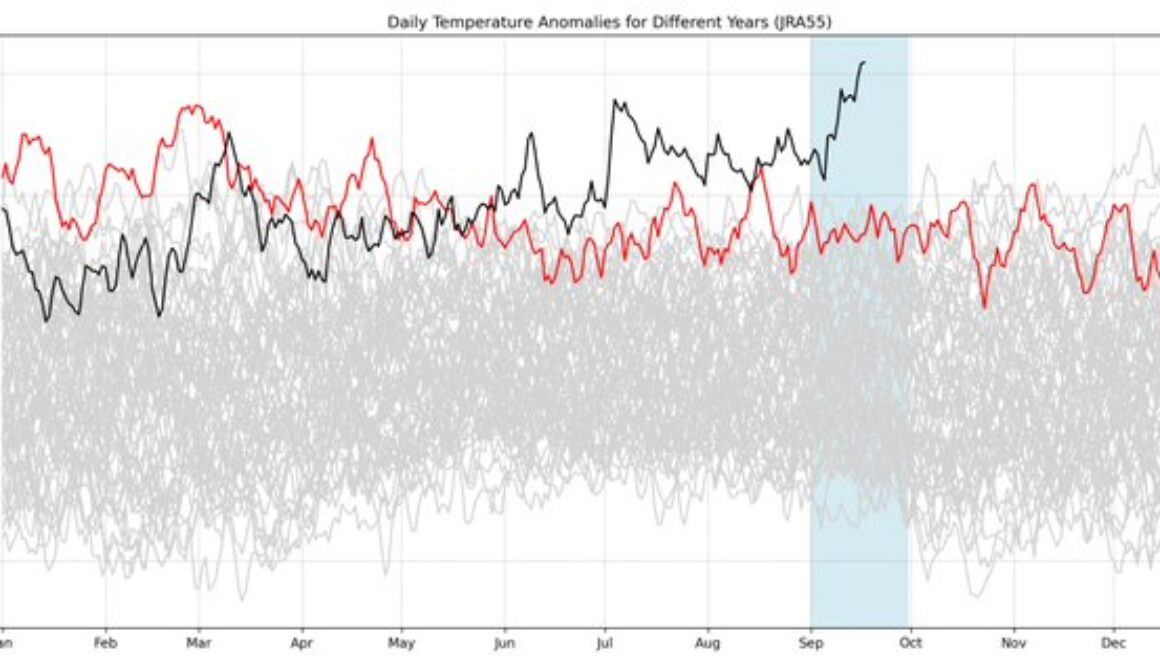
But the global temperature varies from one year to the next. For example, the 2024 temperature spike, while in large part due to climate change, was also driven by a natural El Niño pattern early in the year. That pattern has dissipated for now, and 2025 is forecast to be a little cooler.
These year-to-year fluctuations mean climate scientists don’t view a single year exceeding the 1.5°C mark as a failure to meet the Paris Agreement.
However, the new studies published today in Nature Climate Change suggest even a single month or year at 1.5°C global warming may signify Earth is entering a long-term breach of that vital threshold.
What the studies found
The studies were conducted independently by researchers in Europe and Canada. They tackled the same basic question: is a year above 1.5°C global warming a warning sign that we’re already crossing the Paris Agreement threshold?
Both studies used observations and climate model simulations to address this question, with slightly different approaches.
In the European paper, the researchers looked at historical warming trends. They found when Earth’s average temperature reached a certain threshold, the following 20-year period also reached that threshold.
This pattern suggests that, given Earth reached 1.5°C warming last year, we may have entered a 20-year warming period when average temperatures will also reach 1.5°C.
The Canadian paper involved month-to-month data. June last year was the 12th consecutive month of temperatures above the 1.5°C warming level. The researcher found 12 consecutive months above a climate threshold indicates the threshold will be reached over the long term.
Both studies also demonstrate that even if stringent emissions reduction begins now, Earth is still likely to be crossing the 1.5°C threshold.
Heading in the wrong direction
Given these findings, what humanity does next is crucial.
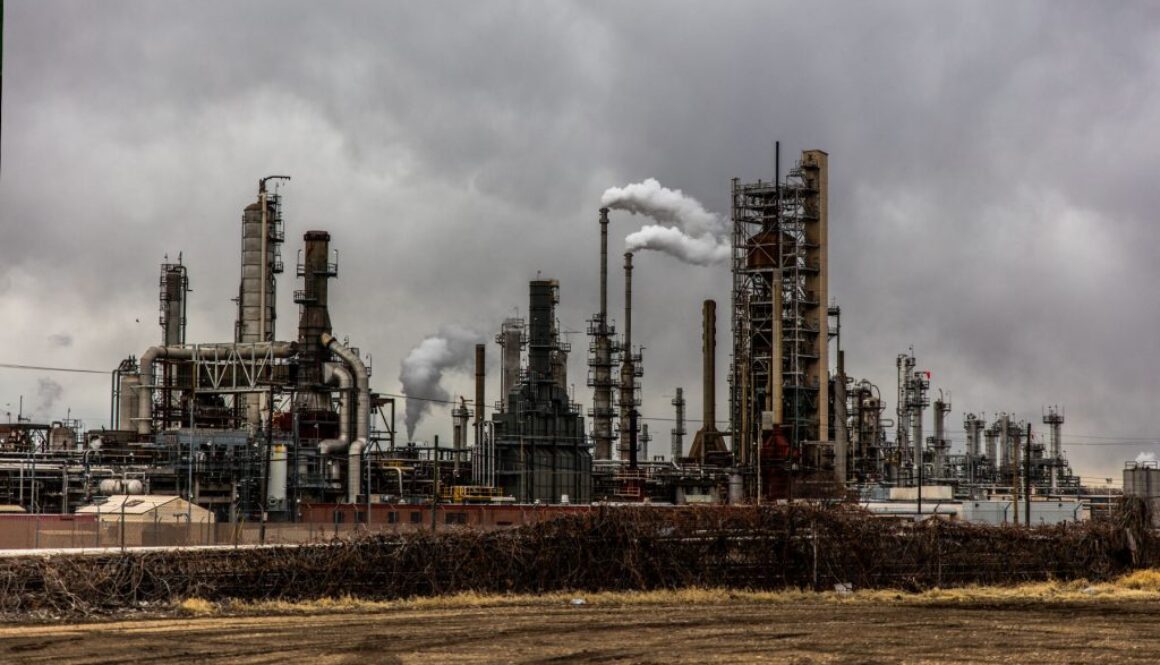
For decades, climate scientists have warned burning fossil fuels for energy releases carbon dioxide and other gases that are warming the planet.
But humanity’s greenhouse gas emissions have continued to increase. Since the Intergovernmental Panel on Climate Change released its first report in 1990, the world’s annual carbon dioxide emissions have risen about 50%.
Put simply, we are not even moving in the right direction, let alone at the required pace.
The science shows greenhouse gas emissions must reach net-zero to end global warming. Even then, some aspects of the climate will continue to change for many centuries, because some regional warming, especially in the oceans, is already locked in and irreversible.
If Earth has indeed already crossed the 1.5°C mark, and humanity wants to get below the threshold again, we will need to cool the planet by reaching “net-negative emissions” – removing more greenhouse gases from the atmosphere than we emit. This would be a highly challenging task.
Feeling the heat
The damaging effects of climate change are already being felt across the globe. The harm will be even worse for future generations.
Australia has already experienced 1.5°C of warming, on average, since 1910.
Our unique ecosystems, such as the Great Barrier Reef, are already suffering because of this warming. Our oceans are hotter and seas are rising, hammering our coastlines and threatening marine life.
These studies are a sobering reminder of how far short humanity is falling in tackling climate change.
They show we must urgently adapt to further global warming. Among the suite of changes needed, richer nations must support the poorer countries set to bear the most severe climate harms. While some progress has been made in this regard, far more is needed.
A major shift is also needed to decarbonise our societies and economies. There is still room for hope, but we must not delay action. Otherwise, humanity will keep warming the planet and causing further damage.
It’s now official. Last year was the warmest year on record globally and the first to exceed 1.5°C above pre-industrial levels. This doesn’t mean it’s too late to rein in further warming, but the ambition required rises with each delay in action.
New Zealand is no exception. Current climate policies are no longer a sufficient contribution to the global effort to keep warming at 1.5°C, according to the Climate Change Commission’s first review of the country’s 2050 climate target.
New Zealand’s current 2050 target has two components. Methane emissions from livestock must be cut by 24% to 47% below 2017 levels and emissions of all other greenhouse gases must reach net zero. But the commission has made three main recommendations to raise ambition:
a net negative target for emissions of long-lived gases (carbon dioxide and nitrous oxide) by removing 20 million tonnes more from the atmosphere than is released each year
a higher target range for biogenic methane emissions to reach at least 35% to 47% below 2017 levels
and the inclusion of emissions from international shipping and aviation.
The commission says these changes would bring New Zealand closer to “net zero for all gases”, in line with what is needed to achieve the goals of the Paris Agreement.
The 2050 target review was the last effort for the commission’s outgoing founding chair, Rod Carr, who has become a significant voice for climate action. In his closing words to parliament, he said:
Those who continue to promote the combustion of fossil fuels in the open air without permanent carbon capture and storage are, in my view, committing a crime against humanity.
The threshold for recommending a change is high. The commission must consider nine key areas and find “significant” developments that justify recommending a different target.
It found three significant changes occurred since the current target was set in 2019.
1. Global action is ahead of New Zealand
While other countries’ current policies, pledges or targets are not sufficient to keep temperature rise at 1.5°C, many countries now have more ambitious targets than New Zealand.
Australia, Japan, US, Canada, EU and Ireland all adopted full net-zero targets in 2021. Finland and Germany have or are considering net negative targets. Among countries with high biogenic methane emissions, several now have full net-zero targets.
2. Scientific understanding of climate change has changed
Climate impacts are appearing sooner and with more severity than the scientific community understood when the target was set in 2019.
3. The burden shifts to future generations
The increased risks and impacts of climate change have implications for inter-generational equity. Delaying action shifts costs and risks to future generations.
The commission’s report also explores New Zealand’s reliance on large-scale commercial exotic afforestation to meet its climate targets. This is one reason why Climate Action Tracker rates New Zealand’s response as highly insufficient and commensurate with a 4°C world.
Carbon in trees is part of the biosphere and will never be stored as permanently as fossil carbon. To take a case in point, Cyclone Gabrielle in 2023 (made worse by climate change) damaged forests, farms and infrastructure, and removed the social licence for forestry in the region.
How the recommended target was set
The commission’s work is tightly prescribed by law. It looked at four possible ways of sharing the global 1.5°C task: equal per capita emissions, national capacity, responsibility for historic warming and the right of all peoples to sustainable development.
New Zealand’s current target does not meet any of these standards, but the commission says the new target would at least meet the “national capacity” criterion and would be feasible and acceptable. However, it would still see New Zealand contributing two to three times its share of global warming this century.
The commission’s assessment is independent of any global warming metrics such as GWP100 (currently the UN standard). Instead, the commission computed New Zealand’s historical and future contribution to temperature rise directly. Both commonly used historical baselines, 1850 and 1990, yield similar results.
New Zealand’s government is currently particularly at odds with the commission’s recommendation on biogenic methane. It appointed a separate advisory panel last year which put forward a target consistent with causing “no additional warming” to the planet from agricultural methane emissions.
This graph shows the contribution to warming from emissions in New Zealand (1850–2100) under the current 2050 target.Climate Change Commission, CC BY-SA
But the commission rejects this idea, finding that unless the rest of New Zealand’s target were to be strengthened significantly, this would not be consistent with the Paris Agreement or the country’s own climate law.
International aviation and shipping emissions
In a quirk of climate diplomacy, international aviation and shipping emissions were excluded from the original 2050 target. But as the commission points out, they most definitely contribute to global warming and are covered by the temperature target of the Paris Agreement.
Other countries are moving in these areas and the International Civil Aviation and maritime organisations have net zero 2050 goals in place. Air New Zealand and the global shipping giant Maersk both support including these emissions in the 2050 target, which the commission finds to be achievable under multiple different pathways.
New Zealand’s dependence on shipping and air transport is a challenge. The commission puts the combined emissions from these sectors at 6.7 megatonnes – 20% of total CO₂ emissions and close to all industrial or all passenger car emissions. The aviation industry in particular is planning for growth, which, unless addressed, will blow the 1.5°C carbon budget both for New Zealand and globally.
Drawing on “net zero pathways” prepared by the international aviation and shipping industries, the commission finds that including these sources in New Zealand’s revised 2050 target would be achievable. The sectors would not necessarily have to enter the Emissions Trading Scheme, but the status quo (under which these sectors do not attract GST, fuel tax or a carbon charge) is inequitable with other sources of economic activity.
The author acknowledges the assistance and contribution by Paul Callister.
This 05 August webinar shares information about the Climate Change Commission’s first annual emissions reduction monitoring report, released in July 2024. The report provides an evidence-based, impartial view of whether the country is on course to reach its goals of reducing and removing greenhouse gas emissions. It provides insight into the progress made, challenges experienced, and opportunities and risks that need to be considered.
The following quote from Dr Rod Carr towards the end of the webinar, paints a realistic picture of what Aotearoa can expect in term of the economic our global standing and the risks. (Pages on this website explain Nationally Determined Contributions, the Paris Accord, and the Emissions Trading Scheme.)
Webinar question: What would happen if New Zealand wasn’t able or didn’t comply with our Nationally Determined Contributions (NDCs)? What are the implications for us?
Answers:
As time it goes on, meeting our NDCs is getting increasingly more difficult and expensive because of delay.
Not meeting the NDCs: we would certainly expect to see greater scrutiny of our actions from our trading partners particularly where we have free trade agreements (FTAs) and particularly with those strong climate elements within them like the EU FTA.
Not meeting them is also likely to come with a loss of influence and on the global scale in relation to climate change, which may mean we are in worse position to advocate for a response that takes into account our national circumstances.
The final thing is that global consumers and customers are increasingly scrutinising their supply chains and looking for products that are reducing emissions, and so we do increase risks around loss of the global markets.
– Jo Hendy CE: Video, The Climate Change Commission 2024 emissions reduction monitoring report, August 2024
When the rest of the world looks at New Zealand, if we haven’t
met our national determine contributions—we won’t know on the 31st of
December 2030 as it takes a couple of years for inventories and count
up— but when the partners that we care about look at our behaviour and
go, ‘Did you do all that you said you would? Did you do all that you
said you would? And did you do all the things you could have done?’
That’s going to inform whether it’s ‘that you tried hard but missed’ or
‘you didn’t try’.
So foreign countries who are in incurring very real economic
costs to reduce their emissions today— and that includes the Europeans,
the Brits, and the Americans (there’s half a trillion U.S. dollars of
taxpayers money being made available to reduce their emissions so the
idea they’re not doing anything; that’s just wrong)—so when those
countries look at NZ in the early 2030s and they look back to 2020, they
go, ‘Well you could have made a better effort to, for example,
decarbonized ground transport there were known technologies that were
available, but you just chose to buy cheap high polluting cars. You
could have chosen to stop burning as much coal and fossil gas to make
electricity by investing more sooner in renewables, but you chose not
to.’ I think that’s going to influence what the world thinks about New
Zealand ‘s behaviour more than whether we did or did hit the exact
number of tonnes for this decade.
And the rest of the world looks at New Zealand and says,
‘You didn’t try. You didn’t take up the known technologies. You are
short sighted, selfish, and reckless in your use of the climate for
profit.’ I think their attitudes to us will be very different than if we
had tried hard and done all we could but things didn’t turn out well.
– Dr Rod Carr, Video, The Climate Change Commission 2024 emissions reduction monitoring report, August 2024
New Zealand is one of the worst countries in the world in terms of meeting its commitments to keep temperatures under 1.5C. (Image: Climate Action Tracker)
New Zealand is also subsidising high greenhouse gas emissions industries by giving the agricultural sector a 100% discount (Image: Nature journal)
Capturing carbon dioxide from the air or industries and recycling it can sound like a win-win climate solution. The greenhouse gas stays out of the atmosphere where it can warm the planet, and it avoids the use of more fossil fuels.
But not all carbon-capture projects offer the same economic and environmental benefits. In fact, some can actually worsen climate change.
I lead the Global CO₂ Initiative at the University of Michigan, where my colleagues and I study how to put captured carbon dioxide (CO₂) to use in ways that help protect the climate. To help figure out which projects will pay off and make these choices easier, we mapped out the pros and cons of the most common carbon sources and uses.
Replacing fossil fuels with captured carbon
Carbon plays a crucial role in many parts of our lives. Materials such as fertilizer, aviation fuel, textiles, detergents and much more depend on it. But years of research and the climate changes the world is already experiencing have made abundantly clear that humanity needs to urgently end the use of fossil fuels and remove the excess CO₂ from the atmosphere and oceans that have resulted from their use.
Balancing the environmental carbon budget is complex, and active carbon management is necessary to stabilize the climate.University of Michigan, CC BY-ND
Some carbon materials can be replaced with carbon-free alternatives, such as using renewable energy to produce electricity. However, for other uses, such as aviation fuel or plastics, carbon will be harder to replace. For these, technologies are being developed to capture and recycle carbon.
Capturing excess CO₂ – from the oceans, atmosphere or industry – and using it for new purposes is called carbon capture, utilization and sequestration, or CCUS. Of all the options to handle captured CO₂, my colleagues and I favor using it to make products, but let’s examine all of them.
CCUS best and worst cases
With each method, the combination of the source of the CO₂ and its end use, or disposition, determines its environmental and economic consequences.
In the best cases, the process will leave less CO₂ in the environment than before. A strong example of this is using captured CO₂ to produce construction materials, such as concrete. It seals away the captured carbon and creates a product that has economic value.
A few methods are carbon-neutral, meaning they add no new CO₂ to the environment. For example, when using CO₂ captured from the air or oceans and turning it into fuel or food, the carbon returns to the atmosphere, but the use of captured carbon avoids the need for new carbon from fossil fuels.
Other combinations, however, are harmful because they increase the amount of excess CO₂ in the environment. One of the most common underground storage methods – enhanced oil recovery – is a prime example.
Underground carbon storage pros and cons
Projects for years have been capturing excess CO₂ and storing it underground in natural structures of porous rock, such as deep saline reservoirs, basalt or depleted oil or gas wells. This is called carbon capture and sequestration (CCS). If done right, geologic storage can durably remove large amounts of CO₂ from the atmosphere.
When the CO₂ is captured from air, water or biomass, this creates a carbon-negative process – less carbon is in the air afterward. However, if the CO₂ instead comes from new fossil fuel emissions, such as from a coal- or gas-fired power plant, carbon neutrality isn’t possible. No carbon-capture technology works at 100% efficiency, and some CO₂ will always escape into the air.
One way to lower the cost is to sell the captured CO₂ for enhanced oil recovery – a common practice that pumps captured CO₂ into oil fields to push more oil out of the ground. While most of the CO₂ is expected to stay underground, the result is more fossil fuels that will eventually send more carbon dioxide into the atmosphere, eliminating the environmental benefit.
Using captured carbon for food and fuel
Short-lived materials made from CO₂ include aviation fuels, food, drugs and working fluids used in machining metals. These items aren’t particularly durable and will soon decompose, releasing CO₂ again. But the sale of the products yields economic value, helping pay for the process.
This CO₂ can be captured from the air again and used to make a future generation of products, which would create a sustainable, essentially circular carbon economy. However, this only works if the CO₂ is captured from the air or oceans. If the CO₂ comes from fossil fuel sources instead, this is new CO₂ that will be added to the environment when the products decompose. So even if it is captured again, it will worsen climate change.
Storing carbon in materials, such as concrete
Some minerals and waste materials can convert CO₂ to limestone or other rock materials. The long-lived materials created this way can be very durable, with lifetimes of longer than 100 years
A good example is concrete. CO₂ can react with particles in concrete, causing it to mineralize into solid form. The result is a useful product that can be sold instead of being stored underground. Other durable products include aggregates used in road construction, carbon fiber used in automotive, aerospace and defense ]applications and some polymers.
Volker Sick, director of the Global CO₂ Initiative at the University of Michigan and author of this article, discusses why carbon capture and its use has been slow to gain attention.
These materials provide the best combination of environmental impact and economic benefit when they are made with CO₂ captured from the atmosphere rather than new fossil fuel emissions.
Choose your carbon projects wisely
CCUS can be a useful solution, and governments have started pouring billions of dollars into its development. It must be closely monitored to ensure that carbon-capture technologies will not delay fossil fuel phaseout. It is an all-hands-on-deck effort to take the best combinations of CO₂ sources and disposition to achieve rapid scaling at an affordable cost to society.
Because climate change is such a complex problem that is harming people throughout the world, as well as future generations, I believe it is imperative that actions are not only fast, but also well thought out and based in evidence.
Authors:
Fred Mason, Gerry Stokes, Susan Fancy and Stephen McCord of the Global CO₂ Initiative contributed to this article.
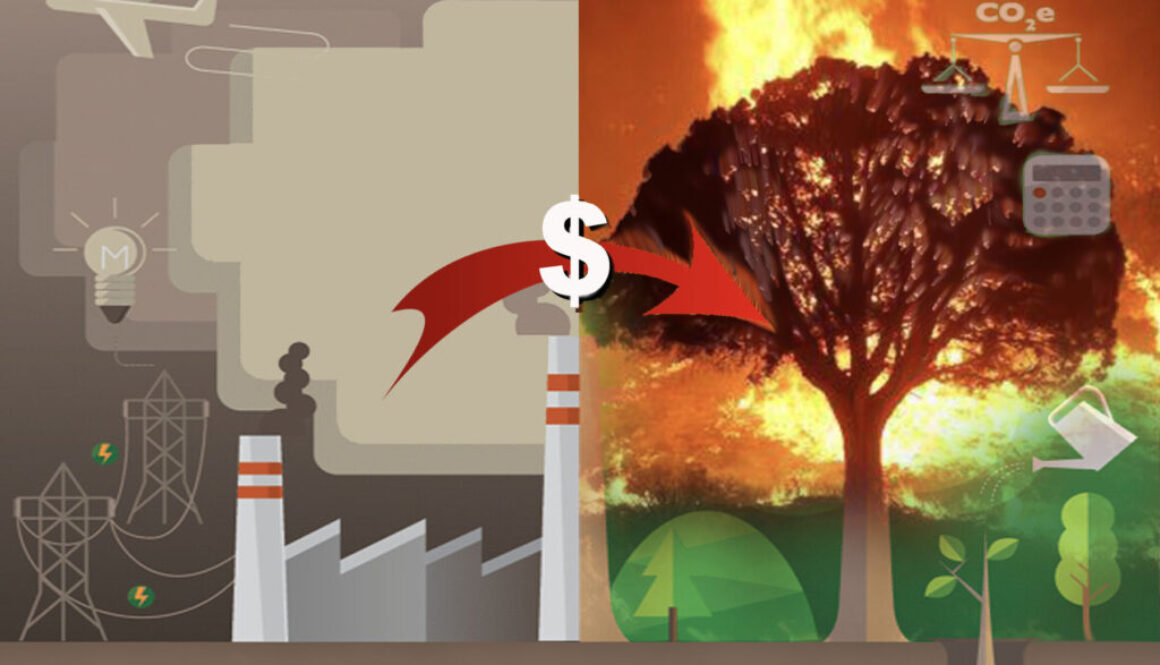
“The Guardian and researchers from Corporate Accountability, a non-profit, transnational corporate watchdog, analysed the top 50 emission offset projects, those that have sold the most carbon credits in the global market.”According to our criteria and classification system:
A total of 39 of the top 50 emission offset projects, or 78% of them, were categorised as likely junk or worthless due to one or more fundamental failing that undermines its promised emission cuts.
Eight others (16%) look problematic, with evidence suggesting they may have at least one fundamental failing and are potentially junk, according to the classification system applied.
The efficacy of the remaining three projects (6%) could not be determined definitively as there was insufficient public, independent information to adequately assess the quality of the credits and/or accuracy of their claimed climate benefits.
“Overall, $1.16bn (£937m) of carbon credits have been traded so far from the projects classified by the investigation as likely junk or worthless; a further $400m of credits bought and sold were potentially junk.” – keep reading
Infographic: How are carbon offsets supposed to work?
Carbon Brief have also released a detailed analysis and mapping, including carbon credits claims made by New Zealand companies:
We can’t just sit around and wait to see what will happen next. We need positive action.
I’ve read a lot of Climate Adaptation Plans and Strategies over the past the last few years, but He Toka Tū Moana Mō Maketū (Maketū Climate Change Adaptation Plan) is hand-down the best. It’s clearly laid out, outlines the community’s priorities, and can readily serve as a template to help every community around Aoteara develop their own Climate Adaptation Plans. Most important of all:
It’s iwi led, community driven, it’s a plan that’s been decided by those who live here. – Elva Conroy, Kaitohotohu / Facilitator (Video; to listen Watch on Youtube)
In the words of the Maketu Iwi Collective, ‘we will be resilient like the anchor stone Takaparore – strong and steadfast against the elements and tides of change and uncertainty. Regardless of what happens as a result of a changing environment, we will remain standing’. – New Zealand Planning Institute, April 2023.
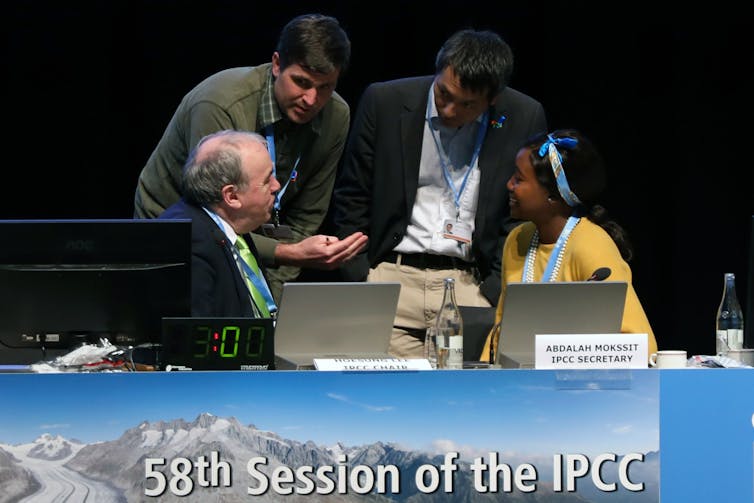
The Intergovernmental Panel on Climate Change’s (IPCC) synthesis report recently landed with an authoritative thump, giving voice to hundreds of scientists endeavouring to understand the unfolding calamity of global heating. What’s changed since the last one in 2014? Well, we’ve dumped an additional third of a trillion tonnes of CO₂ into the atmosphere, primarily from burning fossil fuels. While world leaders promised to cut global emissions, they have presided over a 5% rise.
The new report evokes a mild sense of urgency, calling on governments to mobilise finance to accelerate the uptake of green technology. But its conclusions are far removed from a direct interpretation of the IPCC’s own carbon budgets (the total amount of CO₂ scientists estimate can be put into the atmosphere for a given temperature rise).
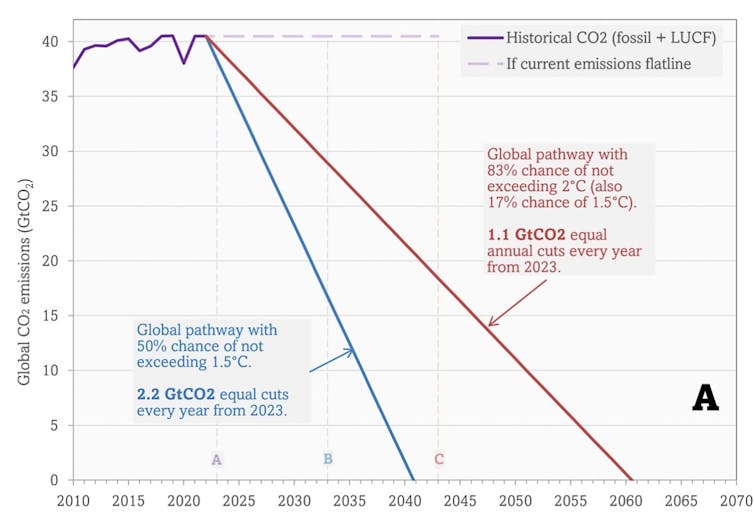
The report claims that, to maintain a 50:50 chance of warming not exceeding 1.5°C above pre-industrial levels, CO₂ emissions must be cut to “net-zero” by the “early 2050s”. Yet, updating the IPCC’s estimate of the 1.5°C carbon budget, from 2020 to 2023, and then drawing a straight line down from today’s total emissions to the point where all carbon emissions must cease, and without exceeding this budget, gives a zero CO₂ date of 2040.
A full description of the above chart is available here.
If emissions stay at their current levels, we will exhaust the 50% chance of 1.5°C in 9 years. If we begin to immediately cut emissions following the blue line, then to stay within the carbon budget for 50:50 chance of not exceeding 1.5°C we need zero global emissions by 2040. The vertical axis represents how much carbon is emitted each year – note the pandemic-related blip in 2020.
Given it will take a few years to organise the necessary political structures and technical deployment, the date for eliminating all CO₂ emissions to remain within 1.5°C of warming comes closer still, to around the mid-2030s. This is a strikingly different level of urgency to that evoked by the IPCC’s “early 2050s”. Similar smoke and mirrors lie behind the “early 2070s” timeline the IPCC conjures for limiting global heating to 2°C.
IPCC science embeds colonial attitudes
For over two decades, the IPCC’s work on cutting emissions (what experts call “mitigation”) has been dominated by a particular group of modellers who use huge computer models to simulate what may happen to emissions under different assumptions, primarily related to price and technology. I’ve raised concerns before about how this select cadre, almost entirely based in wealthy, high-emitting nations, has undermined the necessary scale of emission reductions.
In 2023, I can no longer tiptoe around the sensibilities of those overseeing this bias. In my view, they have been as damaging to the agenda of cutting emissions as Exxon was in misleading the public about climate science. The IPCC’s mitigation report in 2022 did include a chapter on “demand, services and social aspects” as a repository for alternative voices, but these were reduced to an inaudible whisper in the latest report’s influential summary for policymakers.
The specialist modelling groups (referred to as Integrated Assessment Modelling, or IAMs) have successfully crowded out competing voices, reducing the task of mitigation to price-induced shifts in technology – some of the most important of which, like so-called “negative emissions technologies”, are barely out of the laboratory.
The IPCC offers many “scenarios” of future low-carbon energy systems and how we might get there from here. But as the work of academic Tejal Kanitkar and others has made clear, not only do these scenarios prefer speculative technology tomorrow over deeply challenging policies today (effectively a greenwashed business-as-usual), they also systematically embed colonial attitudes towards “developing nations”.
With few if any exceptions, they maintain current levels of inequality between developed and developing nations, with several scenarios actually increasing the levels of inequality. Granted, many IAM modellers strive to work objectively, but they do so within deeply subjective boundaries established and preserved by those leading such groups.
If we step outside the rarefied realm of IAM scenarios that leading climate scientist Johan Rockström describes as “academic gymnastics that have nothing to do with reality”, it’s clear that not exceeding 1.5°C or 2°C will require fundamental changes to most facets of modern life.
Starting now, to not exceed 1.5°C of warming requires 11% year-on-year cuts in emissions, falling to nearer 5% for 2°C. However, these global average rates ignore the core concept of equity, central to all UN climate negotiations, which gives “developing country parties” a little longer to decarbonise.
Include equity and most “developed” nations need to reach zero CO₂ emissions between 2030 and 2035, with developing nations following suit up to a decade later. Any delay will shrink these timelines still further.
Most IAM models ignore and often even exacerbate the obscene inequality in energy use and emissions, both within nations and between individuals. As the International Energy Agency recently reported, the top 10% of emitters accounted for nearly half of global CO₂ emissions from energy use in 2021, compared with 0.2% for the bottom 10%. More disturbingly, the greenhouse gas emissions of the top 1% are 1.5 times those of the bottom half of the world’s population.
So where does this leave us? In wealthier nations, any hope of arresting global heating at 1.5 or 2°C demands a technical revolution on the scale of the post-war Marshall Plan. Rather than relying on technologies such as direct air capture of CO₂ to mature in the near future, countries like the UK must rapidly deploy tried-and-tested technologies.
Retrofit housing stock, shift from mass ownership of combustion-engine cars to expanded zero-carbon public transport, electrify industries, build new homes to Passivhaus standard, roll-out a zero-carbon energy supply and, crucially, phase out fossil fuel production.
Three decades of complacency has meant technology on its own cannot now cut emissions fast enough. A second, accompanying phase, must be the rapid reduction of energy and material consumption.
Given deep inequalities, this, and deploying zero-carbon infrastructure, is only possible by re-allocating society’s productive capacity away from enabling the private luxury of a few and austerity for everyone else, and towards wider public prosperity and private sufficiency.
For most people, tackling climate change will bring multiple benefits, from affordable housing to secure employment. But for those few of us who have disproportionately benefited from the status quo, it means a profound reduction in how much energy we use and stuff we accumulate.
The question now is, will we high-consuming few make (voluntarily or by force) the fundamental changes needed for decarbonisation in a timely and organised manner? Or will we fight to maintain our privileges and let the rapidly changing climate do it, chaotically and brutally, for us?