
The situation in Antarctica, both what’s currently being observed and the latest research, and the consequences are succinctly explained by Prof. Nerilie Abrahm from the Australian National University. Further consequences are discussed in the second half of the video.
biodiversity

By: Edward Doddridge, Research Associate in Physical Oceanography, University of Tasmania
This article is republished from The Conversation under a Creative Commons license. Read the original article.
The rhythmic expansion and contraction of Antarctic sea ice is like a heartbeat.
But lately, there’s been a skip in the beat. During each of the last two summers, the ice around Antarctica has retreated farther than ever before.
And just as a change in our heartbeat affects our whole body, a change to sea ice around Antarctica affects the whole world.
Today, researchers at the Australian Antarctic Program Partnership (AAPP) and the Australian Centre for Excellence in Antarctic Science (ACEAS) have joined forces to release a science briefing for policy makers, On Thin Ice.
Together we call for rapid cuts to greenhouse gas emissions, to slow the rate of global heating. We also need to step up research in the field, to get a grip on sea-ice science before it’s too late.
The shrinking white cap on our blue planet
One of the largest seasonal cycles on Earth happens in the ocean around Antarctica. During autumn and winter the surface of the ocean freezes as sea ice advances northwards, and then in the spring the ice melts as the sunlight returns.
We’ve been able to measure sea ice from satellites since the late 1970s. In that time we’ve seen a regular cycle of freezing and melting. At the winter maximum, sea ice covers an area more than twice the size of Australia (roughly 20 million square kilometres), and during summer it retreats to cover less than a fifth of that area (about 3 million square km).
In 2022 the summer minimum was less than 2 million square km for the first time since satellite records began. This summer, the minimum was even lower – just 1.7 million square km.

The annual freeze pumps cold salty water down into the deep ocean abyss. The water then flows northwards. About 40% of the global ocean can be traced back to the Antarctic coastline.
By exchanging water between the surface ocean and the abyss, sea ice formation helps to sequester heat and carbon dioxide in the deep ocean. It also helps to bring long-lost nutrients back up to the surface, supporting ocean life around the world.
Not only does sea ice play a crucial role in pumping seawater across the planet, it insulates the ocean underneath. During the long days of the Antarctic summer, sunlight usually hits the bright white surface of the sea ice and is reflected back into space.
This year, there is less sea ice than normal and so the ocean, which is dark by comparison, is absorbing much more solar energy than normal. This will accelerate ocean warming and will likely impede the wintertime growth of sea ice.
Headed for stormy seas
The Southern Ocean is a stormy place; the epithets “Roaring Forties” and “Furious Fifties” are well deserved. When there is less ice, the coastline is more exposed to storms. Waves pound on coastlines and ice shelves that are normally sheltered behind a broad expanse of sea ice. This battering can lead to the collapse of ice shelves and an increase in the rate of sea level rise as ice sheets slide off the land into the ocean more rapidly.
Sea ice supports many levels of the food web. When sea ice melts it releases iron, which promotes phytoplankton growth. In the spring we see phytoplankton blooms that follow the retreating sea ice edge. If less ice forms, there will be less iron released in the spring, and less phytoplankton growth.
Krill, the small crustaceans that provide food to whales, seals, and penguins, need sea ice. Many larger species such as penguins and seals rely on sea ice to breed. The impact of changes to the sea ice on these larger animals varies dramatically between species, but they are all intimately tied to the rhythm of ice formation and melt. Changes to the sea-ice heartbeat will disrupt the finely balanced ecosystems of the Southern Ocean.

A diagnosis for policy makers
Long term measurements show the subsurface Southern Ocean is getting warmer. This warming is caused by our greenhouse gas emissions. We don’t yet know if this ocean warming directly caused the record lows seen in recent summers, but it is a likely culprit.
As scientists in Australia and around the world work to understand these recent events, new evidence will come to light for a clearer understanding of what is causing the sea ice around Antarctica to melt.

Antarctic sea ice is highly variable, but there has been less ice than normal for almost all of the last seven years. This chart of monthly sea ice extent anomaly shows the difference between the long-term average sea ice and the observed sea ice in each month. By removing the annual cycle due to sea ice formation and melt, we can see the longer term variability underneath, and the extreme low sea ice events in recent years. Dr Phil Reid, BoM, Author provided
If you noticed a change in your heartbeat, you’d likely see a doctor. Just as doctors run tests and gather information, climate scientists undertake fieldwork, gather observations, and run simulations to better understand the health of our planet.
This crucial work requires specialised icebreakers with sophisticated observational equipment, powerful computers, and high-tech satellites. International cooperation, data sharing, and government support are the only ways to provide the resources required.
After noticing the first signs of heart trouble, a doctor might recommend more exercise or switching to a low-fat diet. Maintaining the health of our planet requires the same sort of intervention – we must rapidly cut our consumption of fossil fuels and improve our scientific capabilities.
By: Matthew England, Scientia Professor and Deputy Director of the ARC Australian Centre for Excellence in Antarctic Science (ACEAS), UNSW Sydney; Adele Morrison Research Fellow, Australian National University; Andy Hogg Professor, Australian National University; Qian Li Massachusetts Institute of Technology (MIT); Steve Rintoul CSIRO Fellow, CSIRO.
Republished in full from The Conversation under a Creative Commons license. See the original article: March 3, 2023
Off the coast of Antarctica, trillions of tonnes of cold salty water sink to great depths. As the water sinks, it drives the deepest flows of the “overturning” circulation – a network of strong currents spanning the world’s oceans. The overturning circulation carries heat, carbon, oxygen and nutrients around the globe, and fundamentally influences climate, sea level and the productivity of marine ecosystems.
But there are worrying signs these currents are slowing down. They may even collapse. If this happens, it would deprive the deep ocean of oxygen, limit the return of nutrients back to the sea surface, and potentially cause further melt back of ice as water near the ice shelves warms in response. There would be major global ramifications for ocean ecosystems, climate, and sea-level rise.
Conveyer overturning schematic showing the pathways of flow in the upper, deep and bottom layers of the ocean.
Our new research, published today in the journal Nature, uses new ocean model projections to look at changes in the deep ocean out to the year 2050. Our projections show a slowing of the Antarctic overturning circulation and deep ocean warming over the next few decades. Physical measurements confirm these changes are already well underway.
Climate change is to blame. As Antarctica melts, more freshwater flows into the oceans. This disrupts the sinking of cold, salty, oxygen-rich water to the bottom of the ocean. From there this water normally spreads northwards to ventilate the far reaches of the deep Indian, Pacific and Atlantic Oceans. But that could all come to an end soon. In our lifetimes.
The authors explain the results of their landmark paper: Is the Southern Ocean about to have its own ‘Day After Tomorrow’ moment? Fact-checked by experts, the video explains how these changes would profoundly alter the ocean’s overturning of heat, freshwater, oxygen, carbon and nutrients, with impacts felt throughout the global ocean for centuries to come.
Why does this matter?
As part of this overturning, about 250 trillion tonnes of icy cold Antarctic surface water sinks to the ocean abyss each year. The sinking near Antarctica is balanced by upwelling at other latitudes. The resulting overturning circulation carries oxygen to the deep ocean and eventually returns nutrients to the sea surface, where they are available to support marine life.
If the Antarctic overturning slows down, nutrient-rich seawater will build up on the seafloor, five kilometres below the surface. These nutrients will be lost to marine ecosystems at or near the surface, damaging fisheries.
Changes in the overturning circulation could also mean more heat gets to the ice, particularly around West Antarctica, the area with the greatest rate of ice mass loss over the past few decades. This would accelerate global sea-level rise.
An overturning slowdown would also reduce the ocean’s ability to take up carbon dioxide, leaving more greenhouse gas emissions in the atmosphere. And more greenhouse gases means more warming, making matters worse.
Meltwater-induced weakening of the Antarctic overturning circulation could also shift tropical rainfall bands around a thousand kilometres to the north.
Put simply, a slowing or collapse of the overturning circulation would change our climate and marine environment in profound and potentially irreversible ways.
Signs of worrying change
The remote reaches of the oceans that surround Antarctica are some of the toughest regions to plan and undertake field campaigns. Voyages are long, weather can be brutal, and sea ice limits access for much of the year.
This means there are few measurements to track how the Antarctic margin is changing. But where sufficient data exist, we can see clear signs of increased transport of warm waters toward Antarctica, which in turn causes ice melt at key locations.
Indeed, the signs of melting around the edges of Antarctica are very clear, with increasingly large volumes of freshwater flowing into the ocean and making nearby waters less salty and therefore less dense. And that’s all that’s needed to slow the overturning circulation. Denser water sinks, lighter water does not.
How did we find this out?
Apart from sparse measurements, incomplete models have limited our understanding of ocean circulation around Antarctica.
For example, the latest set of global coupled model projections analysed by the Intergovernmental Panel on Climate Change exhibit biases in the region. This limits the ability of these models in projecting the future fate of the Antarctic overturning circulation.
To explore future changes, we took a high resolution global ocean model that realistically represents the formation and sinking of dense water near Antarctica.
We ran three different experiments, one where conditions remained unchanged from the 1990s; a second forced by projected changes in temperature and wind; and a third run also including projected changes in meltwater from Antarctica and Greenland.
In this way we could separate the effects of changes in winds and warming, from changes due to ice melt.
The findings were striking. The model projects the overturning circulation around Antarctica will slow by more than 40% over the next three decades, driven almost entirely by pulses of meltwater.
Abyssal ocean warming driven by Antarctic overturning slowdown, Credit: Matthew England and Qian Li.
Over the same period, our modelling also predicts a 20% weakening of the famous North Atlantic overturning circulation which keeps Europe’s climate mild. Both changes would dramatically reduce the renewal and overturning of the ocean interior.
We’ve long known the North Atlantic overturning currents are vulnerable, with observations suggesting a slowdown is already well underway, and projections of a tipping point coming soon. Our results suggest Antarctica looks poised to match its northern hemisphere counterpart – and then some.
What next?
Much of the abyssal ocean has warmed in recent decades, with the most rapid trends detected near Antarctica, in a pattern very similar to our model simulations.
Our projections extend out only to 2050. Beyond 2050, in the absence of strong emissions reductions, the climate will continue to warm and the ice sheets will continue to melt. If so, we anticipate the Southern Ocean overturning will continue to slow to the end of the century and beyond.
The projected slowdown of Antarctic overturning is a direct response to input of freshwater from melting ice. Meltwater flows are directly linked to how much the planet warms, which in turn depends on the greenhouse gases we emit.
Our study shows continuing ice melt will not only raise sea-levels, but also change the massive overturning circulation currents which can drive further ice melt and hence more sea level rise, and damage climate and ecosystems worldwide. It’s yet another reason to address the
climate crisis – and fast.
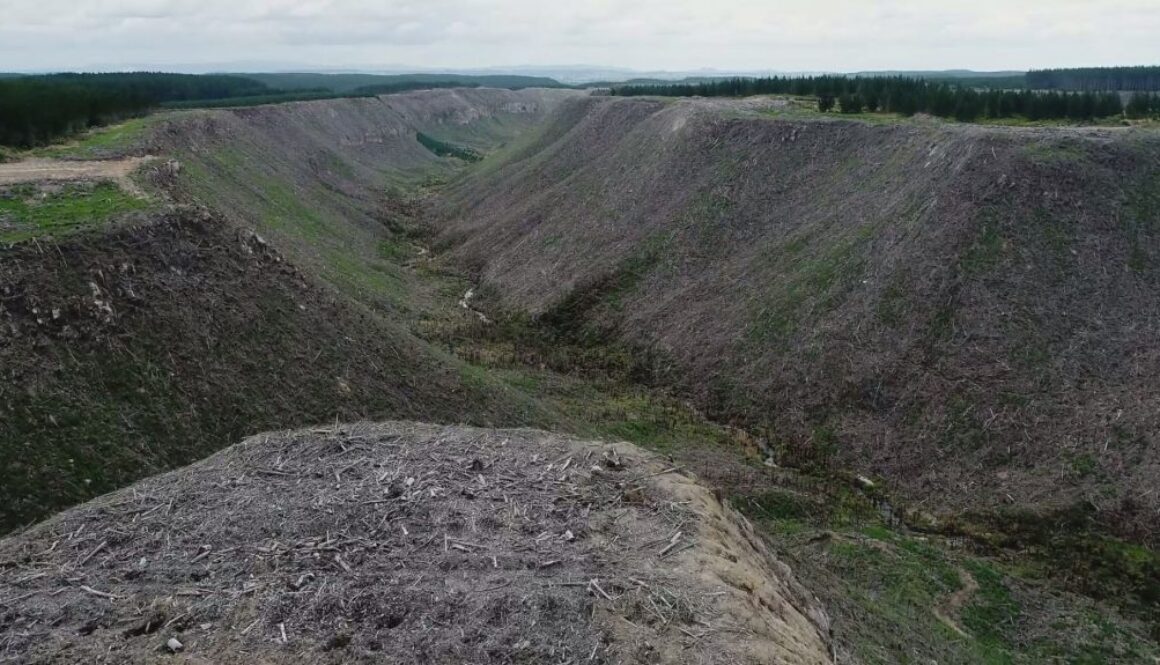
This is such a compelling press release that it’s worth reprinting in full, here:
“The Environmental Defence Society and Pure Advantage have joined forces to draft a submission on the review of the National Environmental Standards for Plantation Forestry (the Standards). The submission seeks significant tightening of the rules governing exotic forest management in Aotearoa New Zealand.
“Our submission starts with the premise that forest practices here are out of step with the rest of the developed world. There are inadequate controls over sediment, slash and soil stability and the sector needs to lift its environmental performance across all of its activities,” said EDS COO Shay Schlaepfer.
“With that in the mind, the scope of the current review, which is focused on permanent exotic carbon forests, is too narrow and we are calling on Government to undertake a fundamental reset of the regulations.“Our submission points to the following key problems with the present Standards:
- It fails to effectively address adverse environmental outcomes associated with plantation forestry activities
- It is unjustifiably and unlawfully permissive for such high risk activities, particularly with regard to afforestation on highly erodible land and clear fell harvesting
- It fails to adequately recognise and encourage the wider and longer-term intergenerational climate resilience, biodiversity, social, cultural, and economic opportunities associated with indigenous forests
- It is insufficiently aligned with national objectives and direction in relation to freshwater, coastal, and indigenous biodiversity protection and long-term carbon sequestration.
“Put in simple terms, the current Standards are failing to address significant adverse environmental effects associated with where trees are planted, whattrees are planted, and how forests are managed and harvested. These effects need to be managed for both new so-called permanent carbon forests and plantation forests.
“We contend that the presumption in the current Standards that forestry activities are “permitted” is unworkable, inappropriate, and ineffective at securing environmental protection.
“We are releasing our draft submission to give some guidance to others wishing to see improvements in the way exotic forests are managed. The intention is to file the final submission on the closing date which is 18 November,” said Ms Schlaepfer.
“The draft submission is available here and feedback can be sent to manager@eds.org.nz
Top image: PureAdvantage
Reposted from Pure Advantage:
There is a new risk to you – the taxpayer – from the government’s recent decision to back off from excluding exotic species like pine from the permanent forest category of the emissions trading scheme.
Since 2023 forest owners can lock up pine plantations, as ‘permanent forests’. In return, while the trees are growing, owners will be able to earn credits which they can sell to polluting industries to offset emissions. When the trees stop growing those revenue streams finish. This means pine plantations will increasingly be planted with no intent to harvest. A new exotic carbon farming industry will rapidly spread across the land–an industry we can think of as carbon mining.
Just like its traditional format, carbon mining is an extractive industry. Once there is no resource left–in this case, when the pine trees stop growing–the mine is of no value and becomes a liability.
In addition to the long-term costs of managing a plantation in its ‘permanent’ state, any deforestation requires the owners to buy emission units. There is a very real risk of a ticking time bomb with the price of emissions units increasing significantly over time.
Pinus radiata is an introduced species, unlike native forests with diversity and climate resilience. With increasing impacts from climate change, pine plantations present heightened risks.
They burn well, creating risks for neighbours and releasing CO2 back into the atmosphere. The recent wildfires in the Landes forest, the largest planted forest in western Europe, saw thousands of hectares burnt and thousands of people evacuated.
These are monocultures, at a time when a biodiversity crisis and collapsing ecosystems are posing risks to human survival. In NZ, they are also monoclones, with a lack of genetic diversity that makes them very vulnerable to climate change. In many parts of the world, pests and diseases are wiping out huge areas of pine plantations.
Pinus radiata is also a relatively short-lived species, especially in New Zealand due to intensive genetic modification. Compared with native forests, pine plantations sequester carbon for a relatively brief period. As the trees age and die, the risks of fire and disease increase, along with the risks that the plantations will be abandoned.
Promises may be made that instead, pine plantations will be converted to native forests. This is a very difficult and high risk process, however. Take for example Maungataniwha pine plantation.
It can take at least a decade to clear logged land of wilding pines and to get it to the point where it can be described as fully regenerated – supposing you are lucky enough to have native seeds in the soil already. It’s costing the Forest Lifeforce Restoration Trust around $70,000 per year, plus a lot of volunteer hours.
If land owners are not inclined or able to meet their obligations, these sorts of projects will be extremely challenging. Government and communities will pick up the costs of remediation.
Millions more would be needed to pay for the purchase of emission units to offset the felled pine, and it is hard to see where this money would come from.
As designed, the ETS is encouraging the misallocation of capital towards carbon mining, with the potential for damaging long-term socio-economic and biodiversity outcomes.
Ultimately, taxpayers and society will be left with the bill. The environment will suffer, biodiversity will be negatively impacted, resilience to climate change will be reduced and you, me, our children will be picking up the bill.
See also this website:
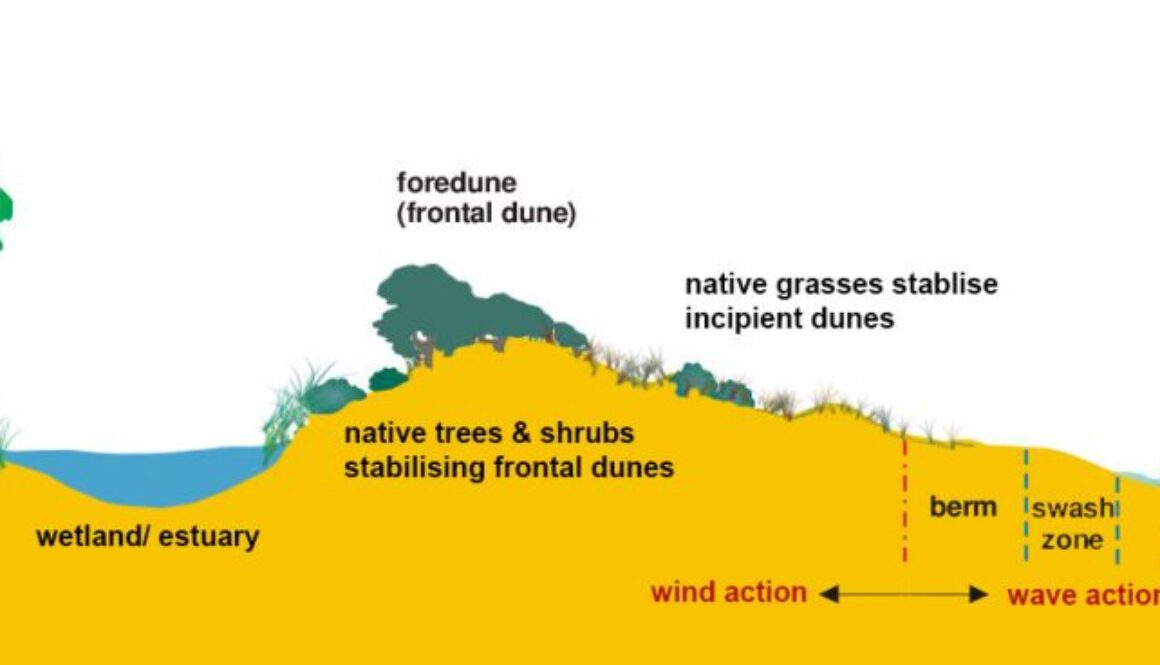
Top image: healthy coastal wetlands
The Environmental Defence Society has filed its submission on the Ministry for the Environment’s regulations on coastal wetlands and says that the Ministry’s approach undermines the original intent of the regulations and leaves coastal wetlands vulnerable to future degradation.
This is a classic case of maladaptation, the exact opposite to adaptation that the Government itself warned against in its National adaptation plan.
“The Resource Management (National Environmental Standards for Freshwater) Regulations 2020 (NES-F) set national direction to protect and improve wetlands and put a stop to further loss of their values”, said EDS COO Shay Schlaepfer.
“The NES-F was clearly intended to apply to both inland and coastal wetlands. The Ministry is now proposing a policy U-turn and wants to exclude coastal wetlands from the regulations.
“This approach is totally unjustified. Coastal wetlands are capable of being mapped so there is no reason why they should not be included. The NES-F is a rules framework that integrates national policy relating to wetlands and provides a consistent approach to wetland management across all domains.
“Removing coastal wetlands from the NES-F will leave a gap in their management and protection at the national level and leave too much discretion with regional councils.
“The Ministry also seeks to exempt certain activities from the consenting pathways set out in the NES-F. These activities have the potential to adversely affect coastal wetlands and should be subject to the regulations.
“Wetlands are one of the country’s most valuable ecosystems. They have undergone extensive loss with over 90% of them destroyed since human occupation. Many of those that remain are in a severely degraded state. The Ministry’s proposed approach will only serve to further continue this decline.
“This cannot be allowed to occur and we urge the Ministry to think again,” Ms Schlaepfer concluded.
- A copy of the submission is here.
- For more information, contact Shay Schlaepfer
