
Skip to content
Menu
Climate Change & Nature: New Zealand
  • The story of climate change
    • Climate wiki: overview
    • Causes
    • Effects
    • Impacts
    • Response
    • Innovation
  • Nature-based solutions
    • Ecosystems: overview
    • Our native ecosystems
    • Our places: what we’re doing
  • Interactive data maps
  • Adaptation
  • Search | site map
  • About us
Close Menu

COP28

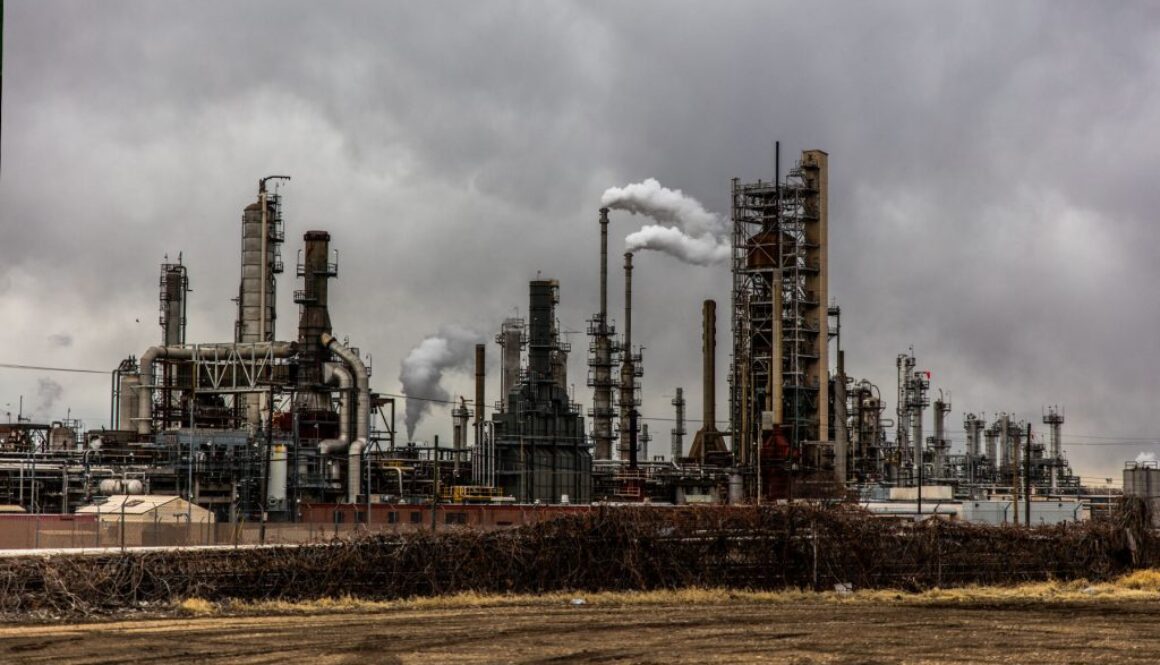
carbon dioxide emissions photo by Patrick Hendry Unsplash
18 12 2023

Manager carbon budget, causes, conferences, effects, emissions trading scheme, fossil fuels, impacts, justice, transition COP28, energy transition

Authors:Alaa Al Khourdajie, Imperial College London; Chris Bataille, Columbia University, and Lars J Nilsson, Lund University

This article is republished from The Conversation under a Creative Commons license. Read the original article.
___________________________________________________________________________________

The COP28 climate summit in Dubai has adjourned. The result is “The UAE consensus” on fossil fuels.

This text, agreed upon by delegates from nearly 200 countries, calls for the world to move “away from fossil fuels in energy systems in a just, orderly and equitable manner”. Stronger demands to “phase out” fossil fuels were ultimately unsuccessful.

The agreement also acknowledges the need to phase down “unabated” coal burning and transition towards energy systems consistent with net zero emissions by 2050, while accelerating action in “the critical decade” of the 2020s.

As engineers and scientists who research the necessary changes to pull off this energy system transition, we believe this agreement falls short in addressing the use of fossil fuels at the heart of the climate crisis.

Such an approach is inconsistent with the scientific consensus on the urgency of drastically reducing fossil fuel consumption to limit global warming to 1.5°C.


‘Abated’ v ‘unabated’

The combustion of coal, oil and gas accounts for 75% of all global warming to date – and 90% of CO₂ emissions.

So what does the text actually ask countries to do with these fuels – and what loopholes might they exploit to continue using them well into the future?

Those countries advocating for the ongoing use of fossil fuels made every effort to add the term “unabated” whenever a fossil fuel phase-down or phase-out was proposed during negotiations.

“Abatement” in this context typically means using capture capture and storage technology to stop CO₂ emissions from engines and furnaces reaching the atmosphere.

However, there is no clear definition of what abatement would entail in the text. This ambiguity allows for a broad and and easily abused interpretation of what constitutes “abated” fossil fuel use.

Will capturing 30% or 60% of CO₂ emissions from burning a quantity of coal, oil or gas be sufficient? Or will fossil fuel use only be considered “abated” if 90% or more of these emissions are captured and stored permanently along with low leakage of “fugitive” emissions of the potent greenhouse gas methane, which can escape from oil and gas infrastructure?

This is important. Despite the agreement supposedly honouring “the science” on climate change, low capture rates with high residual and fugitive emissions are inconsistent with what research has shown is necessary to limit global warming to the internationally agreed guardrails of 1.5°C and 2°C above pre-industrial temperatures.

In a 2022 report, the Intergovernmental Panel on Climate Change (IPCC) indicated that almost all coal emissions and 33%-66% of natural gas emissions must be captured to be compatible with the 2015 Paris agreement.

That’s assuming that the world will have substantial means of sucking carbon (at least several billion tonnes a year) from the air in future decades. If these miracle machines fail to materialise, our research indicates that carbon capture would need to be near total on all fuels.

The fact that the distinction between “abated” and “unabated” fossil fuels has not been clarified is a missed opportunity to ensure the effectiveness of the Dubai agreement. This lack of clarity can prolong fossil fuel dependence under the guise of “abated” usage.

This would cause wider harm to the transition by allowing continued investment in fossil fuel infrastructure – new coal plants, for instance, as long as some of the carbon they emit is captured (abated) – thereby diverting resources from more sustainable power sources. This could hobble COP28’s other goal: to triple renewable energy capacity by 2030.

By not explicitly defining these terms, COP28 missed the chance to set a firm, scientifically-backed benchmark for future fossil fuel use.

The coming age of carbon dioxide removal

Since the world is increasingly likely to overshoot the temperature goals of the Paris agreement, we must actively remove more CO₂ from the atmosphere – with reforestation and direct air capture (DAC), among other methods – than is emitted in future.

Some carbon removal technologies, such as DAC, are very early in their development and scaling them up to remove the necessary quantity of CO₂ will be difficult. And this effort should not detract from the urgent need to reduce emissions in the first place. This balanced approach is vital to not only halt but reverse the trajectory of warming, aligning with the ambitious goals of the Paris agreement.

There has only really been one unambiguously successful UN climate summit: Paris 2015, when negotiations for a top-down agreement were ended and the era of collectively and voluntarily raising emissions cuts began.

A common commitment to “phase down and then out” clearly defined unabated fossil fuels was not reached at COP28, but it came close with many parties strongly in favour of it. It would not be surprising if coalitions of like-minded governments proceed with climate clubs to implement it.

Generic selectors
Exact matches only
Search in title
Search in content
Post Type Selectors

News

  • Antarctica’s ice loss is locked in, and extra snowfall won’t save it that’s bad news for low‑lying coastal areas elsewhere 02/10/2026
  • A landmark UN report says the world will overshoot the 1.5°C climate target. What happens now? 10/09/2026
  • A record‑shattering El Niño is almost here. Here’s what that means for the world’s weather 10/09/2026
  • Why have climate impacts been underestimated? 06/09/2026
  • For the first time, we linked a new fossil fuel project to hundreds of deaths. Here’s the impact of Woodside’s Scarborough gas project 15/10/2025
  • From sea ice to ocean currents, Antarctica is now undergoing abrupt changes – and we’ll all feel them 03/10/2025
  • Fish ‘fingerprints’ in the ocean reveal which species are moving homes due to climate change 03/10/2025
  • High-tech plans to save polar ice will fail, new research finds 11/09/2025
  • See Earth’s seasons in all their complexity in a new animated map 06/09/2025
  • Rain from tropical cyclones to increase under warmer climate 09/08/2025
  • New Zealand Scientists Unlock Antarctic Ice Melt Mystery 16/07/2025
  • Antarctic summer sea ice is at record lows. Here’s how it will harm the planet – and us 13/07/2025
  • Earth is trapping much more heat than climate models forecast – and the rate has doubled in 20 years 03/07/2025
  • ‘Completely unexpected’: Antarctic sea ice may be in terminal decline due to rising Southern Ocean salinity 03/07/2025
  • Our native forests sink more carbon than expected 17/06/2025
  • Overshooting 1.5°C: even temporary warming above globally agreed temperature limit could have permanent consequences 22/05/2025
  • Collateral damage: how the war on ‘woke banking’ could backfire on New Zealand 24/02/2025
  • How to find climate data and science the Trump administration doesn’t want you to see 20/02/2025
  • Loss of forests brought new birds to NZ during the last Ice Age – we’re witnessing a similar process now 20/02/2025
  • Earth is already shooting through the 1.5°C global warming limit, two major studies show 12/02/2025
  • NZ’s climate policies are no longer enough to keep warming at 1.5°C – here’s what needs to happen 24/01/2025
  • Extreme weather may help invasive species outcompete native animals 16/01/2025
  • NZ’s dairy industry faces an uncertain future – its fate now lies in its ability to adapt 23/12/2024
  • Meltwater from Greenland and the Arctic is weakening ocean circulation, speeding up warming down south 22/11/2024
  • Tiny oceanic plankton adapted to warming during the last ice age, but probably won’t survive future climate change 19/11/2024
  • Earth’s climate will keep changing long after humanity hits net-zero emissions. Our research shows why 03/11/2024
  • Atmospheric rivers are shifting poleward, reshaping global weather patterns 17/10/2024
  • The overshoot myth: you can’t keep burning fossil fuels and expect scientists of the future to get us back to 1.5°C 10/10/2024
  • Some New Zealand homes are becoming uninsurable because of natural disasters – but all may not be lost 17/08/2024
  • Extreme wildfires have doubled in just 20 years – here’s the science 09/08/2024
  • Ancient poppy seeds and willow wood offer clues to the Greenland ice sheet’s last meltdown and a glimpse into a warmer future 07/08/2024
  • Aotearoa’s emissions pathway risks being labelled by trading partners as short sighted, selfish, and reckless 06/08/2024
  • The climate is changing so fast that we haven’t seen how bad extreme weather could get 02/08/2024
  • AI-powered weather and climate models are set to change the future of forecasting 26/07/2024
  • Weakening or collapse of a major Atlantic current has disrupted NZ’s climate in the past – and could do so again 12/06/2024
  • Supercharged thunderstorms: have we underestimated how climate change drives extreme rain and floods? 11/05/2024
  • Extreme weather in a changing climate 09/05/2024
  • MSNBC news video explains ‘Intensely frightening ocean warming’ 18/03/2024
  • Climate change is fanning the flames of NZ’s wildfire future 23/02/2024
  • ‘Gold’ natural hydrogen 22/02/2024
  • Atlantic Ocean current headed for a tipping point 13/02/2024
  • Agrivoltaics: solar energy + better crops 31/01/2024
Back To Top
Climate Change & Nature: New Zealand
© Climate Change & Nature: New Zealand 2026

Thanks to startup funding in 2021 from:

Proudly supported by:

Search

Generic selectors
Exact matches only
Search in title
Search in content
Post Type Selectors
Climate change Aotearo New Zealand